
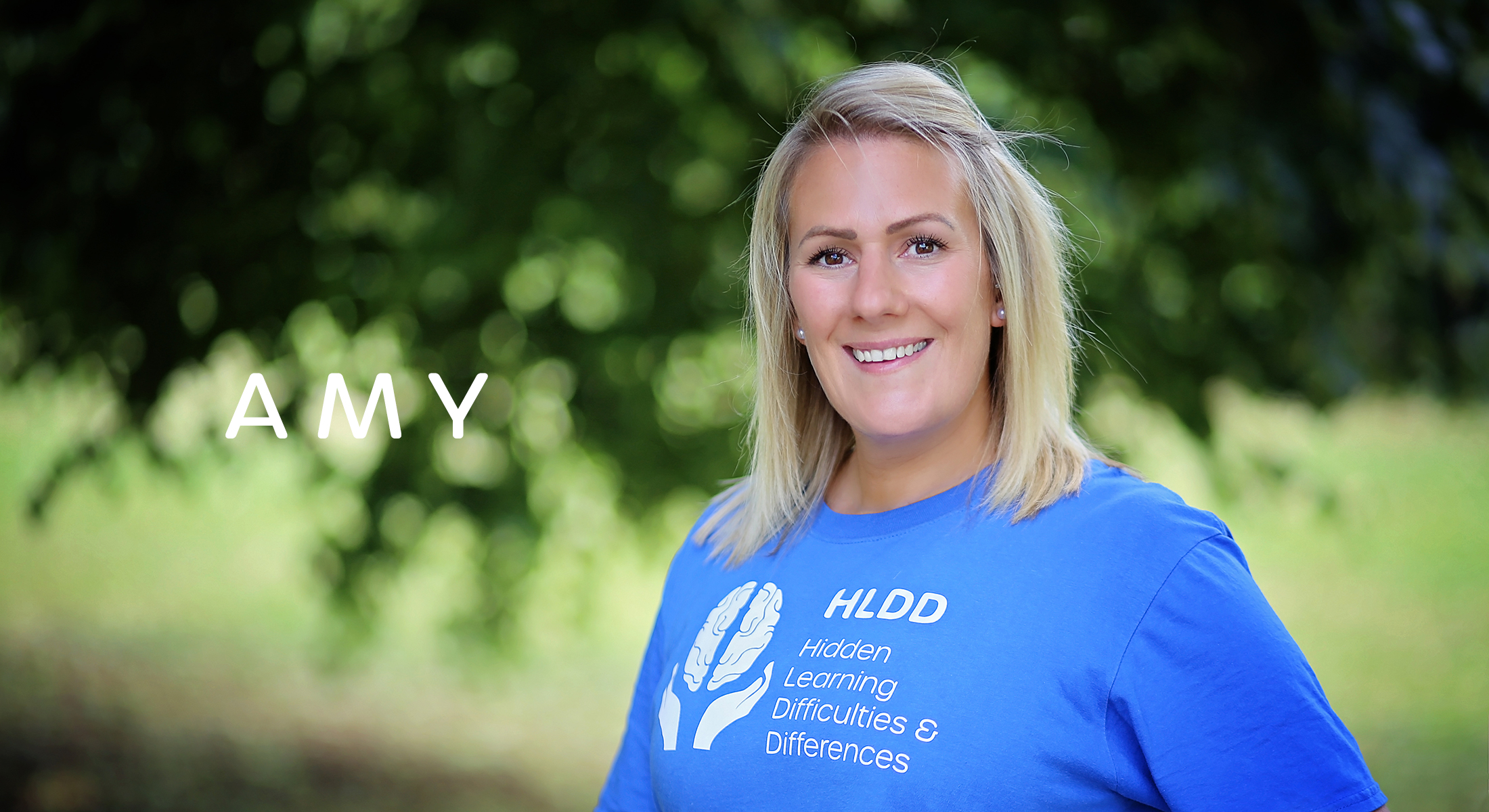
At the time of setting up HLDD I was a 37 year old mum of two girls, ages 8 and 3. At a young age I could tell that my eldest found things tricky and hard to concentrate, mainly academically but not exclusively. The struggles at school became more apparent as she entered year 1, I believe this was due to the change in structure and her inability to keep still or focused, of course I put this down to her being a young child, which is an easy assumption to make. Attending school became a daily struggle which is still ongoing today! I assumed her “attacks” (meltdowns) at home were because I had a tired child and don’t all children have meltdowns? These unexplained attacks continued and became more and more frequent, however at school her teachers always expressed how well behaved, polite and calm she was. Life at school was still pretty much care free with the teacher observing that she was always ‘working towards’ her goals. This is when we were introduced to SENCO (Special Educational Needs Co-Ordinator).
Entering year 2 was one of the worst experiences of both mine and my daughter’s life.
Having spent the summer break at home with us her fear of leaving me increased as soon as the thought of going back to school entered her head. The huge attack that followed at the school gate is truly indescribable. The tummy ache, shaking, nausea, headache and the genuine anxiety that was very apparent on my 6 year olds face was heart-breaking, this was not just a child adjusting back to school this was a child unable to process what was ahead of her.
Throughout the year her confidence significantly started to disappear and she became anxious over almost everything.
The huge attack that happened on the first day back now became a normal occurrence and part of a daily battle to get her into school. At the time, these were confusing as well as emotionally and physically exhausting for us both. The fear of leaving me and the unknown led to her not wanting to attend school at all! However even more extreme was her not wanting to go to friend’s parties or anywhere that she didn’t know or had not been planned out before getting there. It still breaks my heart to see my child go through this and, even worse, to feel like I cannot help her. The teachers continued to advise that she was always ‘working towards’ her goals and despite all the school interventions, private tutoring, confidence building classes (ELSA) and time we had spent helping her she was not progressing any further! My husband and I invested in everything we could, regardless of the financial strain! Like everyone reading this we would encourage her learning, invest all our time and yet ‘working towards’ was always the term used to describe what level she was at.
At the end of year 2 through encouragement from myself and agreement from her teachers, she was assessed for dyslexia. This finally gave us some explanation as to why she struggled so much, and it confirmed that she did indeed show dyslexic traits. Having been so scared from starting year 2 we tackled the beginning of year 3 differently. Meetings with the school SENCO (Special Educational Needs Co-Ordinator), and a meeting with the head teacher eased her transition into year 3 and this formed a good and more positive start to a new school year.
The older my daughter got the more things became apparent, sensory issues were now also a big problem.
Her ‘noise sensitivity’ (hyperacusis) for example people eating/chewing and even breathing are still things that send her into a rage (Misophonia). Another of her sensory struggles include items touching her skin, for example labels, types of clothing and any creams including sun-cream. It also meant things like having her hair washed and brushed were now also part of the daily challenge, a haircut is a rare and nearly impossible task. Things started to take longer and longer and we slowly started to realise that at home we needed to allow extra time for even simple daily tasks and the school also needed to allow her extra time. This was confirmed by an educational psychologist who we found through the British Dyslexia Association (BDA). After 3 hours of testing we were provided with a Diagnostic Assessment Report for Specific Learning Difficulties (SpLD), this report cost us £750! This assessment and 27 page report changed the way we communicate and support our daughter, and gave us the tools to address her school needs. It also confirmed our suspicions for Inattentive ADHD, low self-esteem, slow processing speed, poor working memory, negative self-concept and dyslexia to name a few. The suggestion of inattentive ADHD lead to a QbCheck costing another £150! Until you have a confirmed diagnosis you cannot receive the correct treatment and support. A score above 50 represents a high likelihood for having ADHD-like symptoms, our daughter scored 92. This test is available on the NHS, however you need a referral to CAMHS. Having been under them during year 2 at school we were discharged after 6 months. A second referral in January 2019 was requested, only days after her previous referral expired, 16 weeks later I am writing this without any contact from them despite me repeatedly chasing. The funding is just not available for them.
Having the above official diagnoses meant the school could implement the correct support and interventions. Extra time for tests, sitting near her teacher, small group support, positive communication and encouragement to name a few. Despite all of her teachers and SENCO (Special Educational Needs Co-Ordinator) efforts, school life was still extremely hard for her. Her anxiety levels increased and her low self-esteem deteriorated and she became even more withdrawn. Though her teacher was aware of her difficulties in the classroom, other member of staff and children in and around the school weren’t. This meant all the hard work making the changes in the classroom were not having the positive effect they should have. Her ‘hidden’ difficulties could not be seen and taken into account in all areas of the school, this was then causing the negative outcome and undoing all our hard work.
Sleepless nights of the usual worries led to the idea that I never thought would turn into reality. I chatted to my daughter about the possibility of wearing a simple wristband, that this band would make all staff and pupils in school aware of her ‘Hidden Learning Difficulties and Differences’.
The relief on my daughters face was instant, she immediately asked for one. The idea that people would be able to recognise her ‘hidden’ needs without the worry of having to explain them herself put her mind at ease and gave her reassurance. Just the idea of her needs being more understood within the school environment eased her anxiety. This led me to discuss the initiative over a glass of bubbles (or two) with my best friend Claire. We got to work straight away and HLDD was formed. We want to help as many children and families going through the same difficulties and to make their time at school happier and more positive.
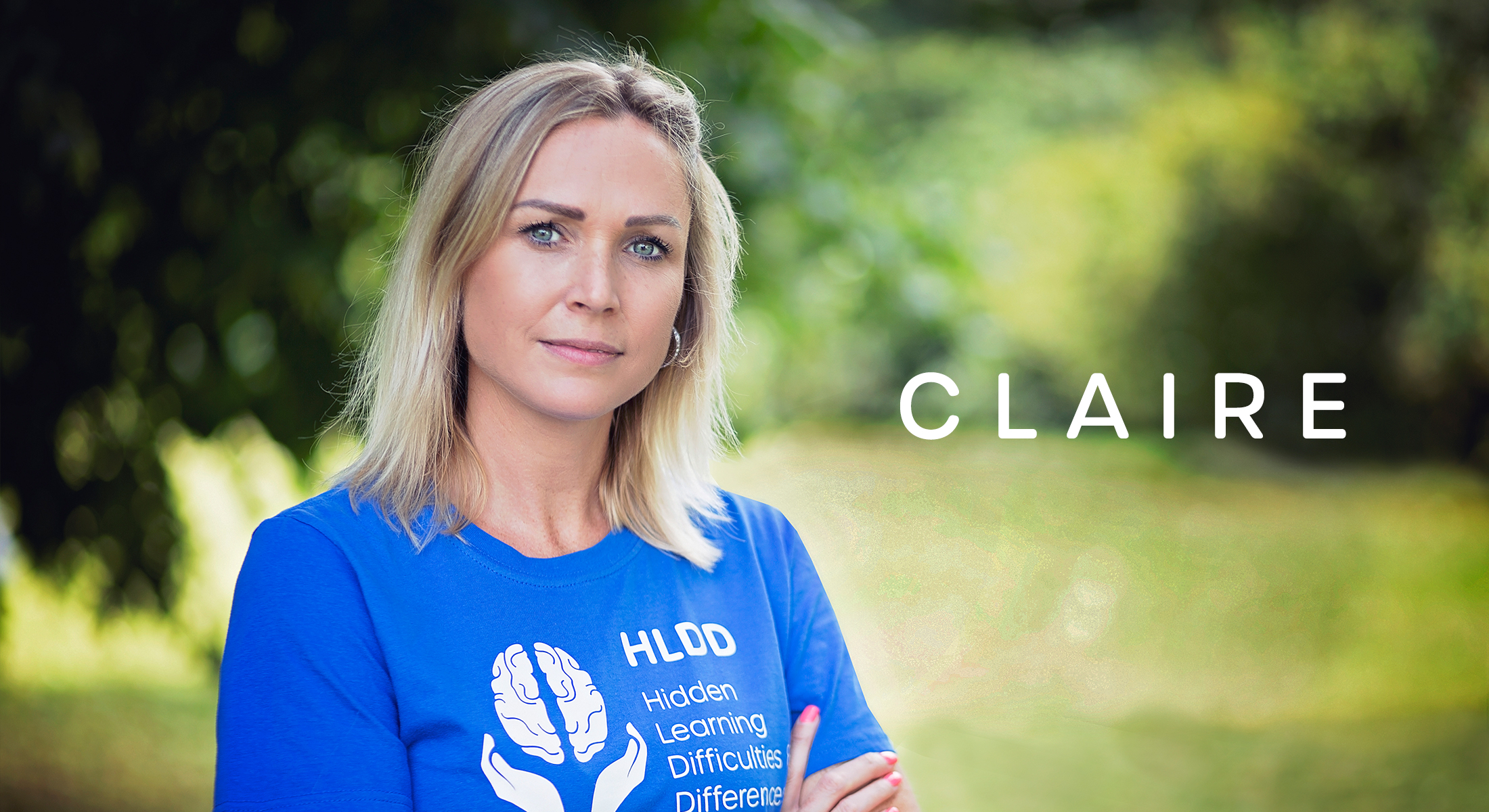
Being godmother to Amy’s eldest and also sharing responsibility for taking and collecting her from school, I see first-hand her daily struggles within school and also the affects is has had on her family and home life.
I am also an aunty to two nephews that both have ADHD and Asperger’s, one from either side of my family. Both of their journeys through school have been very similar to my goddaughters and yet there is 10 years difference between her and my oldest nephew. In these last 10 years the ‘hidden’ part of what children with conditions like these have has not been addressed.
Comments like they are disruptive, daydreaming, lack attention, immature and their lack of social skill were high on the list of comments that we would regularly hear.
Both were bullied, both were not fully supported by their schools, both were failed due to lack of understanding that not every child learns the same. Neither of my nephews are unintelligent, yet because they didn’t conform the same way as a regular child, they were always the naughty one, the one that the teacher couldn’t connect with and therefore became one of the statistics that never met their grades. At the time of writing this my eldest nephew is at college, he is in the highest level for learning computer gaming. Computers were always his thing, computers didn’t need to interact with him, computers allowed him to be him without any judgement. My youngest nephew was extremely lucky to be accepted into a specialist school, where they have small classes that cater for children who learn in different ways.
When writing this I have a 4 year old that is about to start school and so my thought is, what will school be like in another 10 years time!
Although their lives will always be more challenging, both my nephews now have friends. They are no longer the weak link of their classes and both are excelling in areas they love. I know this is due to the fact that one is older and in college and the other no longer in a mainstream school, both are more supported and understood and this has had a huge positive affect on their confidence and overall mental health. A change in the way these boys were perceived, a change that allowed them to be encouraged to do what they are good at, and their lives are so much more positive. It is such a simple thing to not judge a book by its cover and yet, at school and everyday life, this is what every child is judged by.
 HLDD — Hidden Learning Difficulties & Differences